
The Cognitive Core: Why Context Engineering is the Foundational Orchestration Layer of Agentic AI Architecture

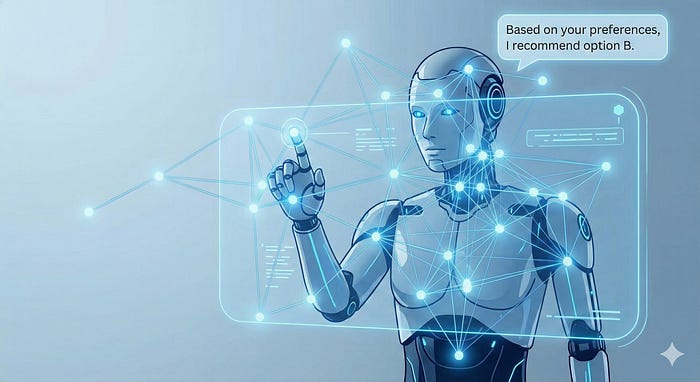
Agentic AI systems respond by how well they use context. Models are increasingly commoditized; what differentiates production systems is how intelligently they select, structure, compress, and control the information that flows into and out of those models.
Context Engineering is the discipline of architecting the information environment — the “working memory” — within which an Large Language Model (LLM) operates. It is the bridge between raw data and actionable intelligence.
This article walks through context engineering end‑to‑end for agentic AI applications, including patterns, code, templates, and how to leverage LangChain and LangGraph
What Is Context Engineering?
Context Engineering is the systematic design and management of the input data (the context window) provided to an LLM to ensure optimal performance, accuracy, and cost-efficiency. While an LLM’s weights represent its pre-trained knowledge, its context represents its current reality
Concretely, “context” includes:
Instructions and role (system prompts)
User inputs and conversation history
Retrieved documents (RAG)
Tool results (API calls, DB queries, code execution, etc.)
State shared across agents (in multi‑agent systems)
Policies, constraints, and safety rules
Environmental signals (user profile, device, locale, time, etc.)
Context engineering answers questions like:
What information should the model see?
When should that information be added, updated, or forgotten?
How should it be represented (raw text, JSON, tables, code)?
Where should it live (in memory, vector DB, key‑value store, external MCP server)?
How much of it can fit into the model’s context window without breaking performance or quality?
In Agentic AI, context is not static; it is dynamic and multi-layered. It involves:
Selection: Deciding what information is relevant to the current step.
Formatting: Structuring data (JSON, Markdown, XML) so the model can parse it easily.
Lifecycle Management: Managing the accumulation of history (short-term) versus retrieval of facts (long-term) to prevent token overflow and hallucination.
Context vs Prompt Engineering
Prompt engineering and context engineering are tightly coupled but conceptually different.
Core distinction
Prompt engineering: Designing instructions and interaction patterns for the model.
Context engineering: Designing information selection and state management around the model.
Comparison
In practice:
Good prompt engineering without good context engineering yields eloquent hallucinations.
Good context engineering with poor prompts yields accurate but poorly structured or incomplete responses.
You need both.
Types of Context Engineering Patterns
To build robust agents, we employ several architectural patterns to manage the context window effectively
1. Static System Context Pattern
A fixed, high‑level instruction or policy layer that’s attached to every call.
Examples: role, tone, domain boundaries, compliance rules.
Usually implemented as system messages or prepend prompts.
from langchain_openai import ChatOpenAI
from langchain_core.prompts import ChatPromptTemplate
from langchain_core.messages import HumanMessage, SystemMessage, AIMessage
from langchain_core.runnables import RunnableWithMessageHistory
from langchain_community.vectorstores import Chroma
from langchain_openai import OpenAIEmbeddings

pythonllm = ChatOpenAI(model=”gpt-4o”, temperature=0)

system_prompt = “”“
You are a senior data engineer and AI architect.
- Always explain trade-offs and cite assumptions.
- Prefer concise, technically precise language.
- If you are uncertain, say so explicitly.
“”“

def ask_llm(question: str) -> str:
    messages = [
        SystemMessage(content=system_prompt),
        HumanMessage(content=question),
    ]
    resp = llm.invoke(messages)
    return resp.content

print(ask_llm(”Explain vector databases in 3 bullet points.”))
2. Conversation Memory Patterns
Manage user interaction history.
Buffer memory: Raw chat history until you hit the window.
Summarized memory: Condensed summaries of older turns.
Episodic memory: Key events or facts stored separately (e.g., user preferences).
from langchain.memory import ConversationSummaryBufferMemory
from langchain.chains import ConversationChain

llm = ChatOpenAI(model=”gpt-4o”, temperature=0)

memory = ConversationSummaryBufferMemory(
    llm=llm,
    max_token_limit=1000,  # will summarize older turns
    return_messages=True,
)

conversation = ConversationChain(
    llm=llm,
    memory=memory,
    verbose=True,
)

# Reuse ‘conversation.predict’ across turns
conversation.predict(input=”Hi, I’m working on a RAG system for legal documents.”)
conversation.predict(input=”We need to support 10k queries per day, any tips?”)
conversation.predict(input=”Now summarize our full discussion in 4 bullet points.”)
3. The Sliding Window (Recent History)
This pattern maintains a fixed number of recent interactions. As new messages arrive, the oldest are dropped. This preserves the immediate flow of conversation but loses long-term details.
4. Retrieval‑Augmented Context (RAG) Pattern
Inject external knowledge into context via retrieval.
Document chunking and storage (vector DB, hybrid index).
Query‑time retrieval and reranking.
Context assembly with citations and grounding constraints.
from langchain_core.documents import Document

# 1) Build a simple vector store
docs = [
    Document(page_content=”Context engineering is about managing model inputs and state.”),
    Document(page_content=”Agentic AI systems often use LangGraph or LangChain.”),
]

embeddings = OpenAIEmbeddings(model=”text-embedding-3-small”)
vectorstore = Chroma.from_documents(docs, embedding=embeddings)

retriever = vectorstore.as_retriever(search_kwargs={”k”: 3})

# 2) Compose RAG chain
prompt = ChatPromptTemplate.from_messages([
    (”system”, “You answer questions using ONLY the provided context. If unsure, say you don’t know.”),
    (”system”, “Context:\n{context}”),
    (”human”, “{question}”)
])

def format_docs(docs):
    return “\n\n”.join(d.page_content for d in docs)

def rag_answer(question: str) -> str:
    context_docs = retriever.invoke(question)
    context_text = format_docs(context_docs)
    messages = prompt.format_messages(context=context_text, question=question)
    resp = llm.invoke(messages)
    return resp.content

print(rag_answer(”What is context engineering?”))
5. Multi‑Agent Shared Context (“Blackboard”) Pattern
Multiple agents write to and read from a shared state:
Global graph or blackboard containing:
User goal and plan
Current working hypothesis or draft
Intermediate tool outputs
Each agent sees a tailored view (filtered projection) of the global state.
from typing import TypedDict, List
from langgraph.graph import StateGraph, END

class AgentState(TypedDict):
    messages: List[str]
    facts: List[str]
    current_task: str

def research_agent(state: AgentState) -> AgentState:
    question = state[”current_task”]
    answer = f”Research summary for: {question}”
    state[”facts”].append(answer)
    state[”messages”].append(f”ResearchAgent: {answer}”)
    return state

def planner_agent(state: AgentState) -> AgentState:
    summary = “; “.join(state[”facts”])
    plan = f”Based on facts: {summary}, next step is: draft answer.”
    state[”messages”].append(f”PlannerAgent: {plan}”)
    return state

graph = StateGraph(AgentState)
graph.add_node(”research”, research_agent)
graph.add_node(”planner”, planner_agent)
graph.add_edge(”research”, “planner”)
graph.add_edge(”planner”, END)
graph.set_entry_point(”research”)
compiled = graph.compile()

initial_state: AgentState = {”messages”: [], “facts”: [], “current_task”: “Explain context engineering”}
final_state = compiled.invoke(initial_state)
print(final_state[”messages”])`
The shared `AgentState` here is the engineered context that all agents see
nd modify.
6. Hierarchical Context Pattern
Combine global summaries + local detail:
Long‑term global summary (project, conversation, user profile).
Local, high‑resolution chunks near the current focus.
Summaries can be recursively refined (hierarchical RAG, tree summaries).
prompt = f”“” {text[System]}
You manage long-term memory for this user.

Given the conversation history below, extract:
- stable user preferences
- recurring goals
- important constraints (budget, timelines)
Do NOT store ephemeral details.

Return a JSON object:
{
  ‘preferences’: [...],
  ‘goals’: [...],
  ‘constraints’: [...]
}

[System]
Conversation history:
{history}”“”
7. Safety / Guardrail Context Pattern
Inject explicit safety policies and checks into context:
“You must not provide medical diagnosis.”
“If information is missing, say you don’t know.”
Add guardrail results (e.g., PII detector output) into the state and let agents act differently.
Advanced Context Engineering Techniques
Once the basics are in place, production‑grade agentic systems typically add several advanced techniques and context engineering becomes more sophisticated.
This includes
1. Hybrid and Multi‑Stage Retrieval
Hybrid search: combine dense (vector) + sparse (BM25) retrieval.
Re-rankers: cross‑encoders scoring top‑K for fine‑grained relevance.
Multi‑hop retrieval: decompose a complex query into sub‑queries and gather context per hop.
Technique stack:
Decompose query with an LLM (“step‑back” prompting).
Retrieve separately for each sub‑question.
Merge, deduplicate, rerank, then assemble an integrated context block.
2. Context Compression and Summarization
To fight context window limits:
Contextual compression retrievers: use an LLM to keep only passages relevant to the current query.
Hierarchical summaries: build layer‑by‑layer summaries (document → section → corpus).
Lossless compression: Beyond simple summarization, techniques like LLMLingua or logical compression involve removing “stop words” or low-value tokens that don’t contribute to semantic meaning, optimizing cost without losing intent.
3. Semantic Context Injection (Long-Term Memory)
This distinguishes between Short-Term Memory (the current thread) and Long-Term Memory (vector stores).
When a user asks a question, perform a Semantic Search on a Vector Database to find related past interactions.
The prompt Injects the retrieved snippets like user profile, role, response preference etc. into the context under a “Relevant Background” section. This allows the agent to remember about the user and other relevant facts from the past conversation.
4. External Context Servers (MCP‑Style)
Offload heavy context management to a dedicated server that:
Knows how to list and read resources (files, PRs, JIRA tickets, etc.).
Manages internal caches and pointers.
Exposes a simple, stable protocol to the LLM/agent layer.
The model then requests “context” via tools rather than being tightly coupled to file systems or DB schemas.
5. Policy‑Aware Context and Guardrails
Prepend explicit policy context: compliance, allowed actions, escalation paths.
Add guardrail outputs to state: PII detection, toxicity scores, risk scores.
Route through different agents or tools based on those guardrail signals (e.g., escalate to human if risk > threshold)
6. KV‑Cache Aware Context Strategies (reduces load)
For streaming or long‑running conversations with stateful models:
Use KV‑cache to avoid re‑sending unchanged tokens.
Design prompts so that stable system and background info appear early and remain cached.
When truncating, remove older, low‑value user/assistant turns, not the core instructions.
Use of Context in RAG‑Based Applications
RAG without context engineering often degenerates into:
Over‑retrieval and noisy context.
Lost‑in‑the‑middle issues within the prompt.
Hallucinations when retriever misses relevant docs.
Key context engineering moves in RAG:
Chunking strategy
Structure‑aware chunking (sections, headings, code blocks).
Overlaps to preserve local continuity.
Metadata‑rich chunks (section, page, date, source).
Retrieval orchestration
Multiple retrievers (by source, modality, index) plus a routing step.
Query rewriting (e.g., decomposed sub‑queries) before retrieval.
Reciprocal rank fusion and reranking.
Context assembly and ordering
Group by document, then sort by relevance and recency.
Attach citations inline and keep a source‑ID mapping.
Use strict instructions: “Only use the provided context; if missing, say you don’t know.”
Window optimization
Token‑aware budgeting: top‑K chunks, then compress lower priority ones.
Summarize earlier context once it’s been “used” in an answer.
Distinguish between:
Evidence context (for the model to reason).
Display context (for the user, e.g., showing full documents).
Evaluation‑driven tuning
Evaluate retrieval quality (precision@K, recall@K, MRR, NDCG).
Evaluate answer faithfulness and context relevance via LLM‑as‑judge.
Use these metrics to tune chunking, retrieval hyper parameters, and ordering.
Features in LangGraph and LangChain Relevant to Context Engineering
Both LangChain and LangGraph are essentially context‑orchestration frameworks.
LangChain
1. Prompt / context abstractions
PromptTemplate,ChatPromptTemplate– parameterized prompts with slots like{context},{question},{format_instructions}.Message types (
SystemMessage,HumanMessage,AIMessage) to structure multi‑turn context.
2. Memory
ConversationBufferMemory,ConversationBufferWindowMemory– raw history.ConversationSummaryMemory,ConversationSummaryBufferMemory– summarized history.VectorStoreRetrieverMemory– long‑term memory via vector DB.RunnableWithMessageHistory– attach memory to any runnable chain.
3. Retrievers / RAG
Unified retriever interface (
.as_retriever()).
Advanced retrievers:
MultiQueryRetriever(query expansion)ContextualCompressionRetriever(LLM‑based compression)Custom retrievers combining vector + BM25.
Document loaders, text splitters, and metadata handling that support structural context engineering.
4. Agents and tools
Tool‑calling abstractions that treat tool outputs as context.
Agent executors that manage the loop of:
Decide action → call tool → update intermediate context → repeat.
LangGraph
LangGraph is explicitly designed around state graphs for agentic systems — perfect for context engineering.
1. StateGraph
You define a
State(typed dict / Pydantic model) that represents shared context.Each node (agent/tool) takes
stateand returns a modifiedstate.Edges can be conditional based on
state, enabling routing by context.
2. Checkpointing
Built‑in checkpointers (e.g., SQLite, Redis) persist state across runs.
Enables long‑running workflows and recovery.
State = context; checkpointing = durable context engineering.
3. Concurrency and parallelism
Branching nodes that run in parallel and merge results back into shared state.
Great for multi‑source retrieval (e.g., SEC filings + news + internal DB).
4. Subgraphs
You can isolate the context.
A “Billing Subgraph” has its own state, keeping the parent graph’s context clean and uncluttered.
5. Deterministic orchestration
Unlike “looping” agents, LangGraph treats your agent system as a graph / FSM.
Makes context flows explicit and debuggable.
6. Integration with LangChain
You can use LangChain LLMs, retrievers, and tools inside LangGraph nodes.
LangChain manages local context per call; LangGraph manages global state across calls and steps.
For agentic AI, a powerful mental model is:
LangChain: local prompt + retrieval + memory pattern per “call”.
LangGraph: global orchestration and context evolution over time and agents.
Summary
Context engineering is the discipline of controlling the information and state around model calls: what goes in, what stays, what is evicted, and how it’s structured.
It is the “Cognitive Core” that enables Agentic AI to function reliably in production. It requires moving beyond simple prompt construction to full-stack information management.
Foundation: Start with Sliding Windows and Summarization to handle basic chat history.
Intermediate: Implement RAG with Relevance Scoring to manage external knowledge.
Advanced: Use LangGraph State and Subgraphs to architect complex, multi-agent context flows where information is routed only to where it is needed.
By mastering these patterns, you transition from building simple chatbots to architecting “Enterprise-Grade AI Systems”
“Thank you for your time, and please feel free to suggest any other topic you’d be interested in reading an article about.”
You can show your support!
❤️ Like it
🤝 Send a LinkedIn connection request to stay in touch and discuss ideas.